
|
Success Stories

Our Location
UNIQUE FERTILITY CENTRE (IVF)Deep Hospital, 481, Model Town, Ludhiana, Punjab, India. Phone: +91 161 4614090 Clinic Hours
9:00am to 4:00pm
7:00pm to 8:00pm |
Causes of Infertility
The problems of infertility are faced from the time of evolution of man and will probably remain with us0 forever. Infertility is defined as the couple's inability to conceive after one year of unprotected coitus (with adequate coital frequency). 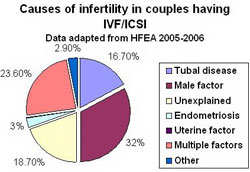
Since the peak fecundity in females is between the age of 20 to 35 and declines thereafter, the couple is investigated and treated earlier in the case of older couples.
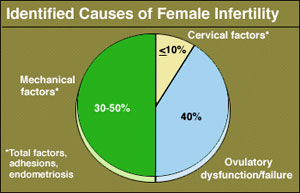
The incidence of fertility is 15% to 22%. Out of the infertile couples, the female factor is responsible in 45%, the male factor in 30% to 35%, while in the others the cause remains obscure or unexplained.
The fertility of a couple depends on the normal interaction of a number of factors. The male must be able to produce large numbers of healthy spermatozoa, they must have traverse the male reproductive system and be discharged at ejaculation into the anatomically normal female reproductive system. The sperm must then penetrate the cervical mucus and ascend through the uterus into the fallopian tubes where fertilization must occur. Simultaneously the female, who must have an intact hypothalamic-pituitary-ovarian axis, must release the ovum at the correct time. The expelled ovum must have entered the patent and freely mobile fallopian tubes and must have been transported to the area where fertilization will occur. Following fertilization the blastocyst must travel toward the endometrial cavity where nidation must take place in an endometrium, which has been appropriately prepared by hormone action. The slightest defect in these basic events in wither partner leads to infertility. 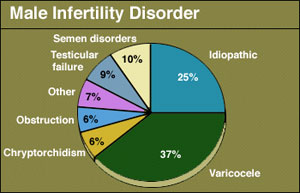 Causes of Male Infertility
Normal Semen Parameters
As per WHO guide lines normal semen parameters should be.
Causes of Female Infertility
|




